

Piles (Hemorrhoids)
Swollen veins in the lower anus and rectum that cause tissue growths, itching, discomfort and bleeding.
Overview
Piles are the result of swollen veins in the lower anus and rectum. They can cause tissue growths in and around the anus and lead to significant discomfort. These growths vary in size and location.
Internal piles occur within the rectum and are usually not visible externally, though a pile may grow to protrude outside the anus — a prolapsed hemorrhoid. External piles form small lumps on the outside edge of the anus; they are very itchy and can become painful if a blood clot develops. Thrombosed external piles require immediate medical treatment.
Types & stages
- Grade I
- The growth causes no symptoms and does not protrude out of the anus.
- Grade II
- The piles may prolapse from the anus but return inside independently.
- Grade III
- The piles prolapse and only recede with manual intervention.
- Grade IV
- The piles prolapse outside the anus and cannot be pushed back in.
Common symptoms
- Painful lumps in and around the anus
- Itching and discomfort around the anus
- Discomfort during and after passing stools
- Bloody stools
Prevention & self-care
- Keep stools soft with fibre and adequate fluids
- Avoid straining and long periods on the toilet
- Stay active; avoid prolonged sitting
- Treat constipation early rather than waiting for flares
When to see a doctor
Seek care for heavy anal bleeding, a hard painful lump, fever, or any change in bowel habit lasting more than three weeks.
Book a consultationRelated conditions
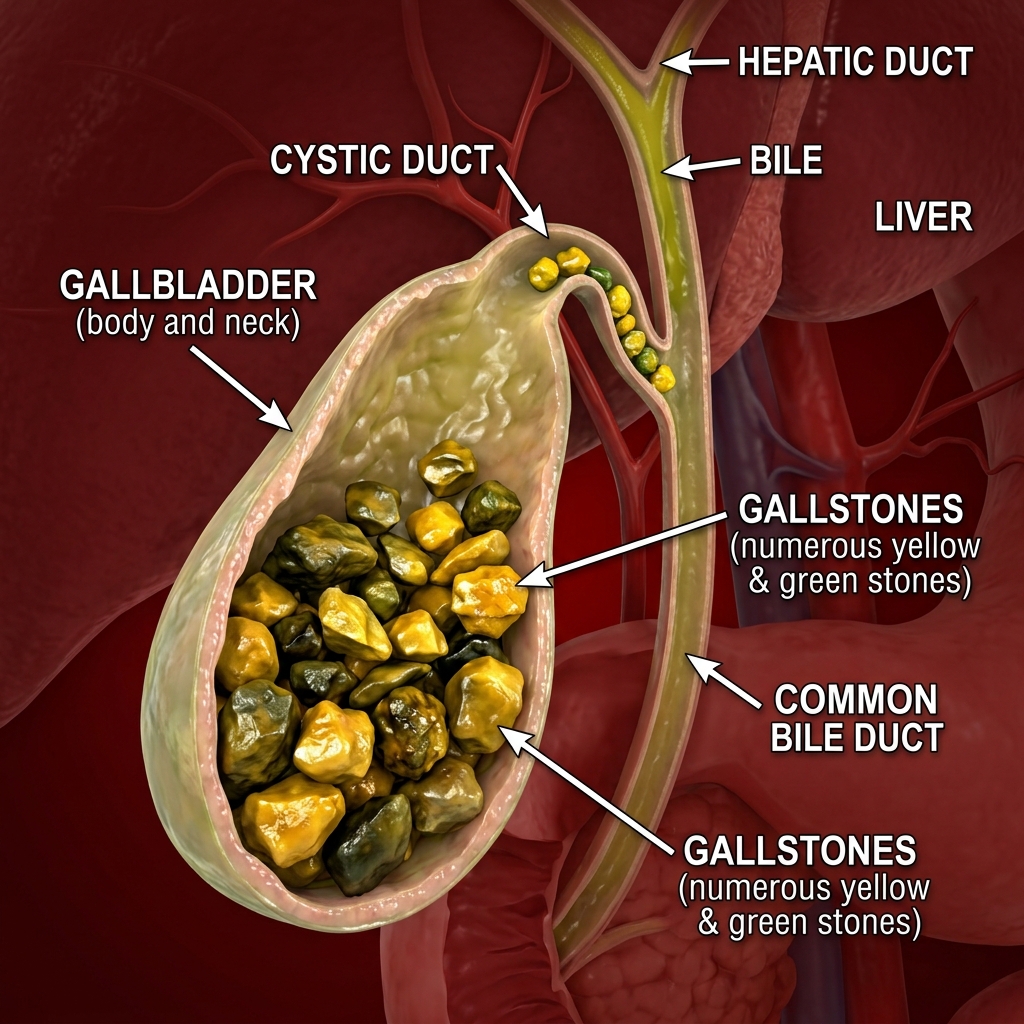
Gall Stone
Hardened deposits of digestive fluid that form in the gallbladder and can trigger sudden biliary colic.

Anal Fissure
A small tear in the thin, moist tissue lining the anus, usually caused by constipation and hard stools.

Constipation
Passing fewer than three stools a week or having persistent difficulty passing stool.