
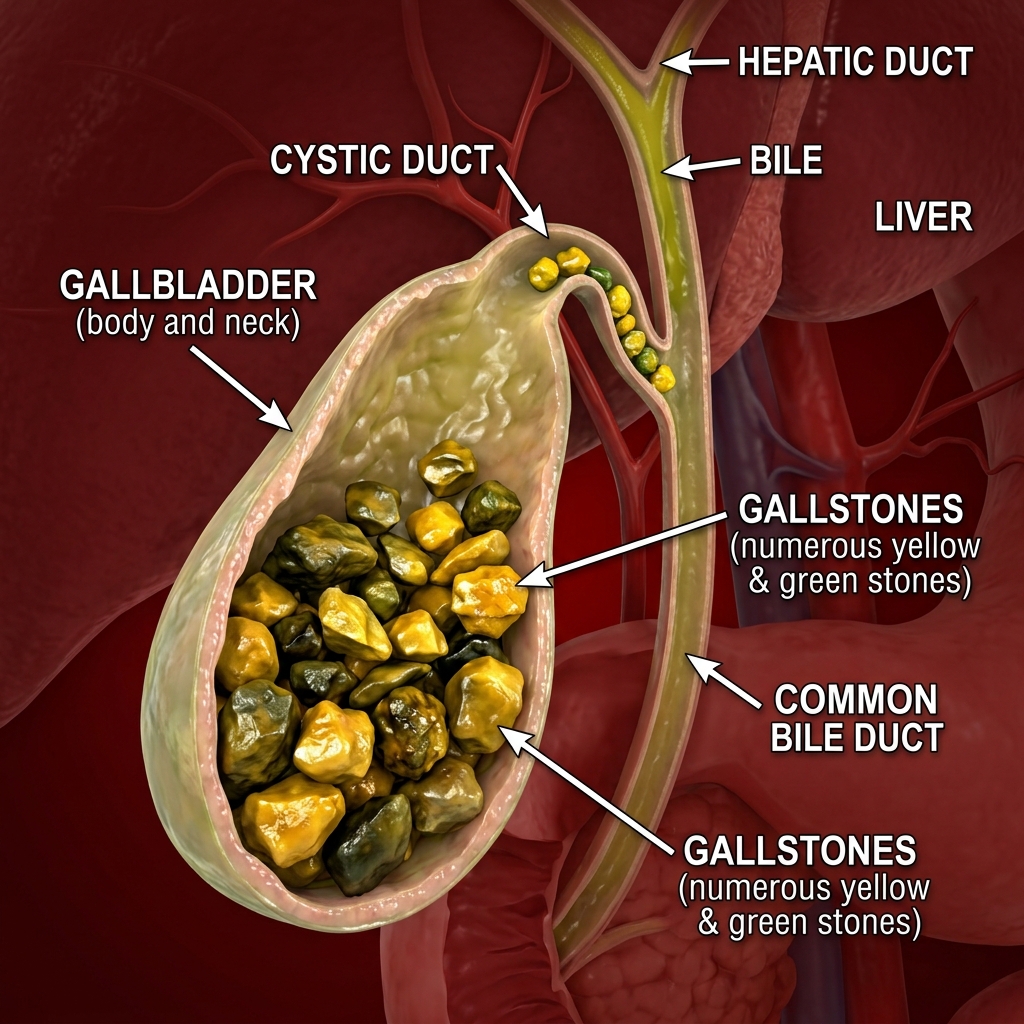
Gall Stone
Hardened deposits of digestive fluid that form in the gallbladder and can trigger sudden biliary colic.
Overview
Gallstones, or cholelithiasis, are hardened deposits of digestive fluid that form in the gallbladder, a small organ beneath the liver. The gallbladder stores bile, which aids the digestion of fats.
Gallstones vary from the size of a grain of sand to as large as a golf ball, and they form when the chemical composition of bile becomes imbalanced — through excess cholesterol, excess bilirubin, or bile that stays too concentrated because the gallbladder does not empty properly.
Types & stages
- Cholesterol gallstones
- The most common type, often yellow-green, primarily composed of undissolved cholesterol.
- Pigment gallstones
- Smaller, darker stones made of bilirubin, more common with liver cirrhosis and blood disorders.
Common symptoms
- Sudden, intense pain in the upper right abdomen, radiating to the back or right shoulder blade
- Nausea and vomiting with the abdominal pain
- Indigestion, bloating, heartburn and gas
- Jaundice — yellowing of skin and eyes if a stone blocks the bile duct
- Fever and chills, suggesting infection such as cholecystitis
Prevention & self-care
- Eat regular meals; avoid prolonged fasting and crash diets
- Keep fat intake moderate and fibre intake high
- Maintain a steady, healthy weight
- Bring existing ultrasound or MRCP reports to your consultation
When to see a doctor
Get urgent care for abdominal pain lasting several hours, yellowing of the eyes, or high fever with chills.
Book a consultationRelated conditions

Piles (Hemorrhoids)
Swollen veins in the lower anus and rectum that cause tissue growths, itching, discomfort and bleeding.
Anal Fissure
A small tear in the thin, moist tissue lining the anus, usually caused by constipation and hard stools.
Constipation
Passing fewer than three stools a week or having persistent difficulty passing stool.